
Meta: Discover how recession impacts India—from job losses to global market disruptions. Here’s what you can do to protect yourself.
Imagine…
My neighbor, Ramesh, who used to work with oil and gas and drives a flashy Honda City, now sells vegetables at the local market.
I saw him last month, and I couldn’t understand. So, I asked, “Bhai, what happened?”
His eyes went blank. “The company shut down overnight. 15 years of service… gone. Wife’s jewelry… sold. Kids’ school fees… pending.”
This is a recession in India. Not some abstract economic concept your finance professor talked about.
Real people. Real families. Real devastation.
And if you think it can’t happen to you… you’re exactly where Ramesh was two years ago.
What’s This Recession Business Really About?
Forget the textbook definitions.
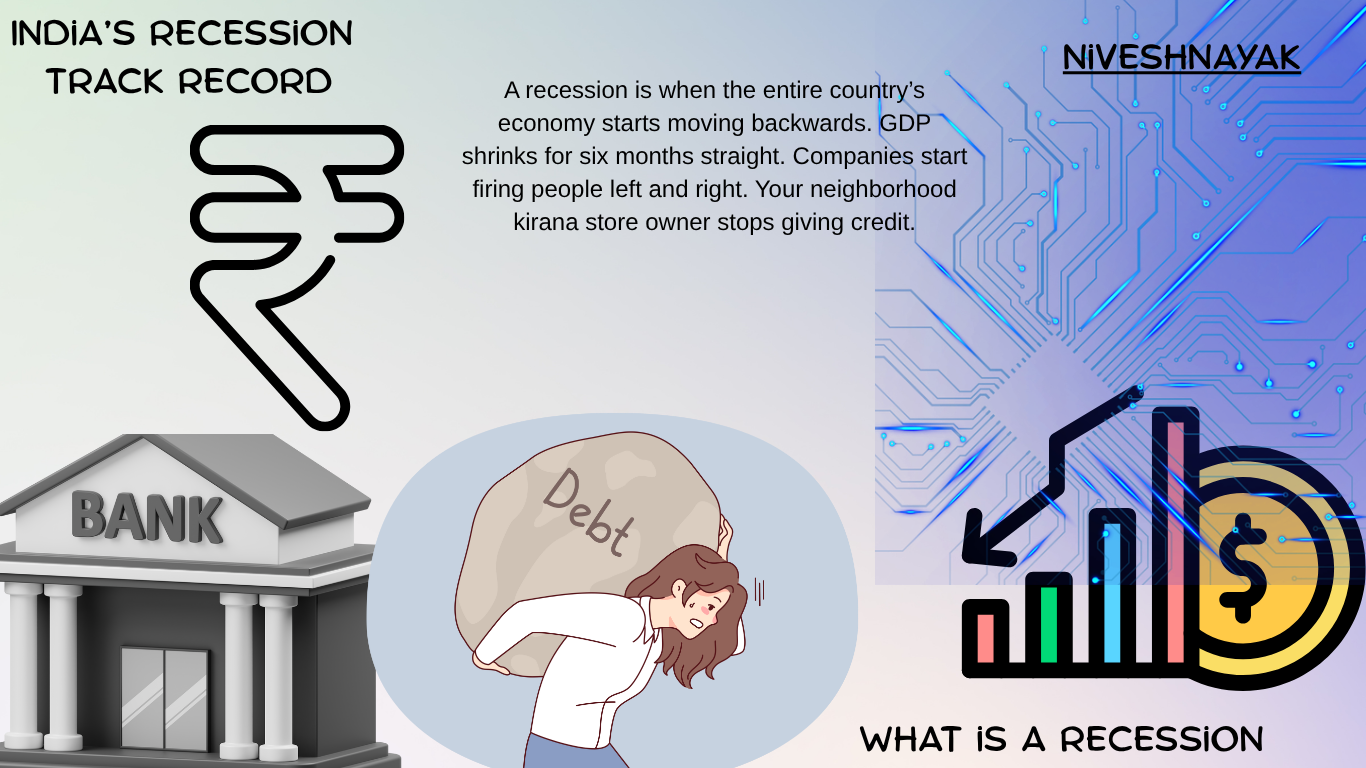
A recession is when the entire country’s economy starts moving backwards. GDP shrinks for six months straight. Companies start firing people left and right. Your neighborhood kirana store owner stops giving credit.
It’s when your middle-class lifestyle gets a reality check.
The 2008 crisis? I remember walking through Gurgaon’s IT hub. Empty office buildings. “For Lease” signs everywhere. Cafes that used to be packed with techies serving just tea and biscuits.
COVID was different. It didn’t just slow down the economy. It shut down commutes. The streets became so empty that you could hear your echo.
India’s Recession Track Record (It’s Worse Than You Think)
1991: The Year We Almost Became Another Sri Lanka
India had enough foreign currency to last maybe 3 weeks. Three weeks! We literally pawned our gold to the Bank of England. Like a middle-class family selling the mother’s jewelry to pay rent.
The liberalization that followed? It wasn’t some grand economic vision. It was desperation. We opened our markets because we had no choice.
2008: The Global Hangover India Couldn’t Escape
“We’re insulated,” the finance minister said. “Our banks are safe.” Tell that to the 200,000 people who lost jobs in the first six months.
I had friends in IT who went from planning US trips to sharing auto-rickshaws. Export businesses collapsed overnight. My cousin’s garment export company—200 employees—shut down in three months.
COVID: When the Economy Went Into ICU
This was complete economic cardiac arrest. I watched migrant workers walking on highways. Hundreds of kilometers on foot. Carrying children, belongings, and dreams—all shattered.
GDP fell by 7.7%. Sounds technical? It means the country became 7.7% poorer. In one year.
How Recession Destroys Indian Lives
Jobs Vanish Like Smoke
Recession doesn’t just increase unemployment—it creates employment graveyards.
First, companies stop hiring. Then they start “rightsizing” (a fancy word for firing people). Then they cut the salaries of survivors.
I’ve seen engineers driving Uber. MBA graduates selling insurance door-to-door. The informal sector gets hit the worst—no job contracts, no severance pay, no unemployment benefits. Just… nothing.
The Middle-Class Slide
You know what’s terrifying about Indian recessions? How fast middle-class families slide into poverty.
From EMI payments to EMI defaults. From eating out twice a week to cooking at home with cheaper ingredients. From private schools to government schools.
I know families who stopped buying newspapers to save ₹5 per day. Families who canceled cable TV, stopped using cars, and sold gold jewelry piece by piece.
The scariest part? Once you slide down, climbing back up takes years.
The Mental Health Crisis Nobody Talks About
Recession kills hopes before it kills bank accounts. I’ve seen grown men cry about losing jobs. Marriages are breaking under financial stress. Kids dropping out of schools.
In India, we don’t raise alarm about mental health. The reason why people suffer silently until they break completely.
Which Sectors Get Hit Hardest?
1. Agriculture:
Farmers think recession happens only in cities. Wrong. Global demand drops, and export prices crash. Small farmers can’t absorb losses like big corporations.
2. Production:
India manufactures stuff for the world. When the world stops buying, Indian factories stop producing. Textile units in Tamil Nadu and auto parts in Gurgaon are all export-dependent.
3. IT:
Everyone thought IT was recession-proof. 2008 taught us that outsourcing isn’t a guarantee—it’s a privilege that disappears when companies cut costs.
The Global Domino Effect
When we hurt, the world feels it too. We supply generic medicines to 200+ countries. Recession here means medicine shortages everywhere. We’re the back office for global companies. Our problems become their operational nightmares.
It’s not just about us anymore. The global market is a network. What touches one touches all.
How to Protect Yourself (Beyond Corporate Jobs)
Don’t wait for government jobs to survive. Palliatives are not reliable either. Try these 4 ways to overcome recession.
- Multiple Income Streams: Freelance, start a side business, and invest. Stop building your future around your employer.
- Cash Reserves: Besides your fixed deposits, have some actual cash for immediate needs.
- Skill Up: Sectors like healthcare, essential services, digital marketing, and food production survive when luxury spending stops.
- No Debt: Every debt becomes a thorn during recession. That’s why if you must borrow, it should be for assets, not consumption.
Final Thoughts:
The Harsh Reality
We will face more recessions. It’s not being negative. It’s simply economic reality. The truth is if you prepare, you’ll survive and thrive. But if you ignore warning signs, you may pay the price in the most dangerous way—with broken dreams.
Ramesh, my neighbor who went from Honda City to vegetable vendor? He’s doing better now. Not back to his old lifestyle, but stable. He diversified—vegetables in the morning, accounting work in the evening, and teaching kids on weekends.
The recession taught him something his 15-year corporate job never did—never depend on anyone else for your family’s survival.
That’s how recession impacts India, a lesson nobody teaches in business schools. Economic downturns don’t just destroy—they also reveal who’s actually prepared for real life. The next recession is coming. You can be Ramesh before the crash or Ramesh after the recovery.